

Gold has always held a special place for investors. It’s not just a symbol of wealth and tradition but also a smart investment option that helps protect money from inflation and market risks. This post is to educate our readers on how to invest in gold in India, there are plenty of methods to choose from. You can even start investing in gold for as low as ₹100. Gold has been on the news lately due to it’s rapid price surge in the past few months.
Table of Contents
Different Ways to Invest in Gold
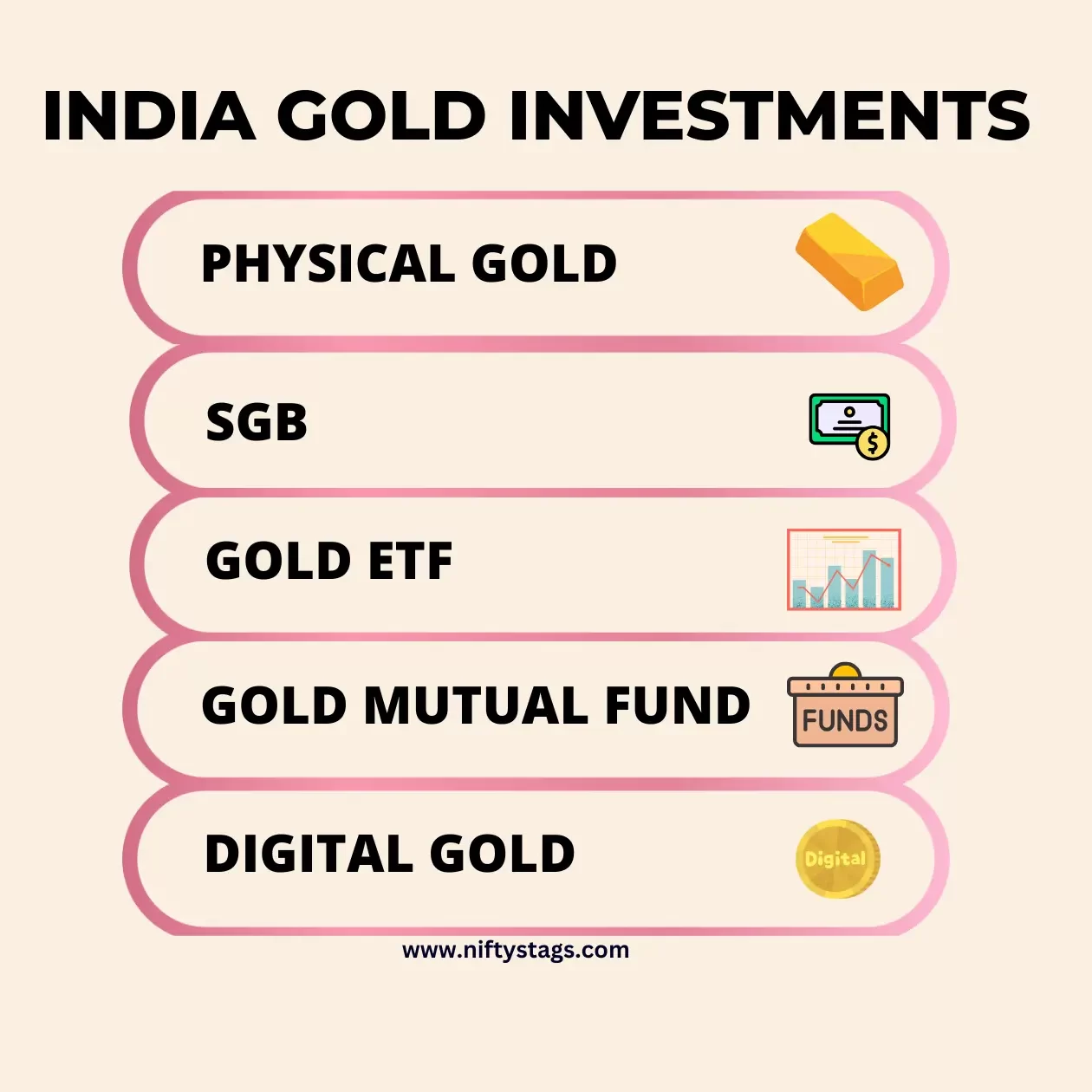
Broadly there are five options to invest in gold in India.
- Physical gold
- Sovereign Gold Bonds (SGBs)
- Gold Exchange Traded Funds (Gold ETFs)
- Gold Mutual Funds
- Digital Gold
1. How to Invest in Physical Gold:
This is the traditional method—buying jewellery, coins, or gold bars (bullion). This is the most common in India where people from India invest in gold. It is as simple as walking to your nearest jeweler and placing an order.
Physical gold is familiar and tangible, often bought for weddings, festivals, and gifts. Purity should be verified via BIS Hallmarking and always buy from trusted sellers. jewellery involves making and wastage charges that can be significant; resale may recover less due to deductions. Coins and bars are better for pure investment compared to jewellery because they avoid high making charges. Storage and insurance are personal responsibilities, and locker charges may add to cost.

Some jewellers also offer Jeweller Gold Saving Schemes. They offer monthly deposit schemes for a fixed amount, redeemable in jewellery after 10–12 months, sometimes with a bonus month or making-charge discounts. These plans are useful for planned jewellery purchases but are typically redeemable in jewellery only, not cash. Since these are not market securities, investor protection varies by jeweller, and terms should be read carefully, including what happens if the jeweller closes or changes policies.
This is an example which a local jeweler offers near me. I pay a certain fixed amount for 11 months(say ₹2,000) and the jeweller pays for the 12th month as a bonus. After 10–12 months, you can use the collected amount (sometimes with a bonus from the jeweller) to purchase gold jewellery. Choosing a coin or bar over jewellery can reduce the wastage charges.
Most average Indian choose this route of investing. Fun fact : Indian women hold 11% of the worlds gold!.
Pros
- Tangible asset and culturally meaningful; can be used or gifted.
- Can be pledged for loans with many lenders and banks.
- No digital or market account required.
Cons
- Making/wastage charges (especially jewellery) reduce returns.
- Risk of theft; storage and insurance costs apply.
- Resale spreads and purity concerns if not hallmarked.
Tip:
If you buy jewellery as an investment, look for BIS hallmark gold and keep bills safe for resale or exchange. Choose coins and bars which have low wastage charges.
2. How to invest in Sovereign Gold Bonds (SGBs)
How It Works
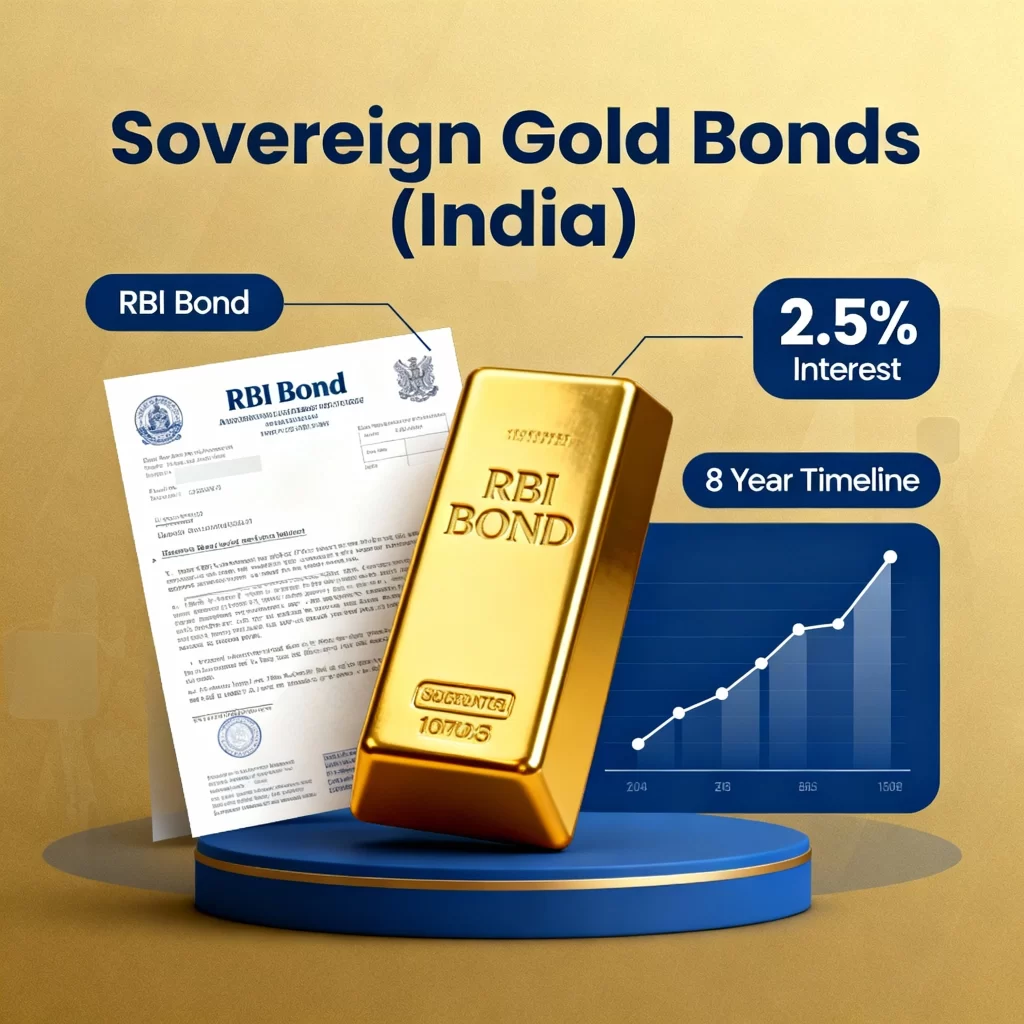
You buy bonds equivalent to grams of gold (minimum 1 gram). The price is linked to the market price of gold. These bonds have an 8-year maturity with an option to exit after 5 years. You can buy them through banks, post offices, or online platforms.
Key Benefit
SGBs offer 2.5% annual interest on the invested amount, paid semi-annually—something no other gold investment provides.
Pros of SGBs
- Backed by the Government of India.
- No storage hassles.
- Earns interest (2.5% per year).
- Capital gains tax exemption if held till maturity.
- Safe and transparent investment.
Cons of SGBs
- Lock-in period: 8 years (though you can exit early after 5 years).
- Not ideal for short-term investors.
- Gold price fluctuations affect resale value.
In the Union Budget 2025, the Government of India announced that it would stop issuing new Sovereign Gold Bonds (SGBs). The last issue took place in early 2024. This decision was made because the scheme had become too costly for the government due to rising gold prices, the fixed interest payments, and tax benefits together made it expensive to continue. You can still invest in SGB by buying the bonds from stock market if you have a demat account.
3. How to Invest in Gold Etf:
Gold ETFs (Exchange Traded Funds) are financial products that track the price of gold. They are traded on stock exchanges just like shares.
How It Works
Each unit of a Gold ETF represents a certain amount of gold (usually 1 gram). To invest, you need a demat account and a trading account. You can buy or sell ETF units anytime during market hours.
Pros of Gold ETFs
- Highly liquid: You can sell anytime on the stock exchange.
- No storage or security concerns.
- Transparent pricing: Linked directly to gold’s market price.
- Regulated by SEBI.
- Ideal for diversification in investment portfolios.
- Ideal for traders who want to profit on short term movement of gold prices.
Cons of Gold ETFs
- Brokerage and management fees apply.
- No interest income.
- Need a demat account to invest.
4. How to Invest in Gold Mutual Funds:
Gold Mutual Funds invest in Gold ETFs or companies related to gold mining and production. These funds don’t need a demat account, making them simpler for regular investors. You can invest in gold mutual funds through a brokerage or Asset Management Company. The list of a few gold mutual funds ate at the end of the section.
How It Works
You invest money in a mutual fund scheme that tracks the price of gold through ETFs or gold-related assets. You can invest via SIP (Systematic Investment Plan) or a lump sum.
Pros of Gold Mutual Funds
- No need for a demat account.
- Professional fund management.
- Easy to invest through SIPs.
- Regulated and transparent.
Cons of Gold Mutual Funds
- Expense ratio: Fund management fees apply.
- Returns depend on fund performance.
- No physical gold ownership.
- Returns depend on the gold ETF’s performance.
5. How to invest in Digital Gold:
Digital gold is a modern and convenient way to invest in 24K pure gold without handling it physically. You can buy it through apps like PhonePe, Google Pay, Paytm, Tanishq Digital Gold, or SafeGold.
How It Works
When you buy digital gold, the company purchases and stores physical gold on your behalf in secure vaults. You can sell your holdings anytime or even request physical delivery.
Pros of Digital Gold
- Easy to buy/sell anytime (even for small amounts like ₹100).
- Pure 24K gold (99.9% purity).
- No need to store it physically.
- Instant transactions and digital records.
Cons of Digital Gold
- Not regulated by RBI or SEBI.
- Storage charges may apply after a certain period.
- Liquidity depends on the platform’s policies.
- No interest or dividend.
The main advantage is some apps even allow you to invest as low as 100 rupee in digital gold. While this is ideal for a small time investor, it should be noted that these are not regulated by RBI or SEBI.
Bottom-line:
The core tenant of investing in gold is to take advantage of it’s rising prices. Sovereign Gold Bonds (SGBs) have been the best option so far. They not only offered a 2.5% annual interest payout but also let investors benefit from rising gold prices—a rare combination of safety and returns. Even though new SGBs are no longer being issued, you can still buy it from the stock market. Please make sure to analyze the price as it can sometimes command a hefty premium.
For beginners or those who want to start small, Digital Gold is a convenient choice since you can begin with as little as ₹100. Just remember, it’s not regulated by the RBI or SEBI, so it’s better suited for short-term goals. If you want a mix of safety and flexibility, consider Gold ETFs. Gold mutual funds are also another option but keep in mind they not only invest in gold, but also invest in gold mining companies as well and also has a fund management fee.
Physical gold is also ideal, if you can manage the storage. Physical gold always has the option of being used as a collateral for getting gold loans or also worn as jewellery.
So the bottom-line is choose the best one ideal for your situation. Whichever way you choose, remember one golden rule — don’t invest all your money in gold. Experts suggest keeping 10–15% of your total portfolio in gold for balance and stability.
We hope this post helped you learn on how to invest in gold in India, do let us know your thoughts in our comment section
Can you invest 100 rupee in gold?
Yes, for investment as small as 100 rupee, you can invest in digital gold.
What is the best way to invest in gold in India?
The best way depends on your goal. For long-term and safe investment, Sovereign Gold Bonds (SGBs) or Gold ETFs are ideal. For short-term or small savings, Digital Gold or Gold Mutual Funds are more flexible. If you prefer something physical, jewellery or coins are traditional choices.
Is it safe to buy gold online in India?
Yes, buying Digital Gold from trusted platforms like PhonePe, Paytm, or Tanishq Digital Gold is generally safe. Always ensure the provider partners with reputed custodians like MMTC-PAMP or SafeGold, and check storage and redemption policies.
What is the minimum amount to invest in gold?
You can start investing in Digital Gold or Gold Mutual Funds with as little as ₹100 to ₹500.
Are Sovereign Gold Bonds still available in 2025?
No. In the Union Budget 2025, the Government of India stopped new issuances of SGBs due to high costs. However, older bonds remain valid and continue to earn interest until maturity.
Do I need a demat account to invest in gold?
You need a demat account for Gold ETFs, but not for SGBs, Digital Gold, or Gold Mutual Funds. Those can be bought easily online or through banks and mutual fund apps or websites.
Can I take delivery of Digital Gold in physical form?
Yes, most platforms let you redeem Digital Gold into physical gold coins or bars. You’ll need to pay delivery and minting charges. Minimum redemption quantity varies by provider.
How much gold should I have in my portfolio?
Experts suggest keeping 10–15% of your total investment portfolio in gold. It adds balance, reduces risk, and protects your wealth during inflation or market downturns.


Pingback: List of Gold ETF in India: How to Buy Gold Like a Stock - Niftystags